For many chronically ill people, accessing support isn’t as simple as booking an appointment.
Previous experiences of being dismissed, disbelieved or harmed can shape how safe we feel asking for help again.
We may arrive at a service carrying more than our symptoms. We may also be carrying anxiety, medical trauma and the expectation that we’ll need to defend ourselves.
Trauma-informed support recognises this.
It doesn’t mean treating chronically ill clients as fragile. It means creating an environment where people have enough safety, trust and choice to participate in their care.
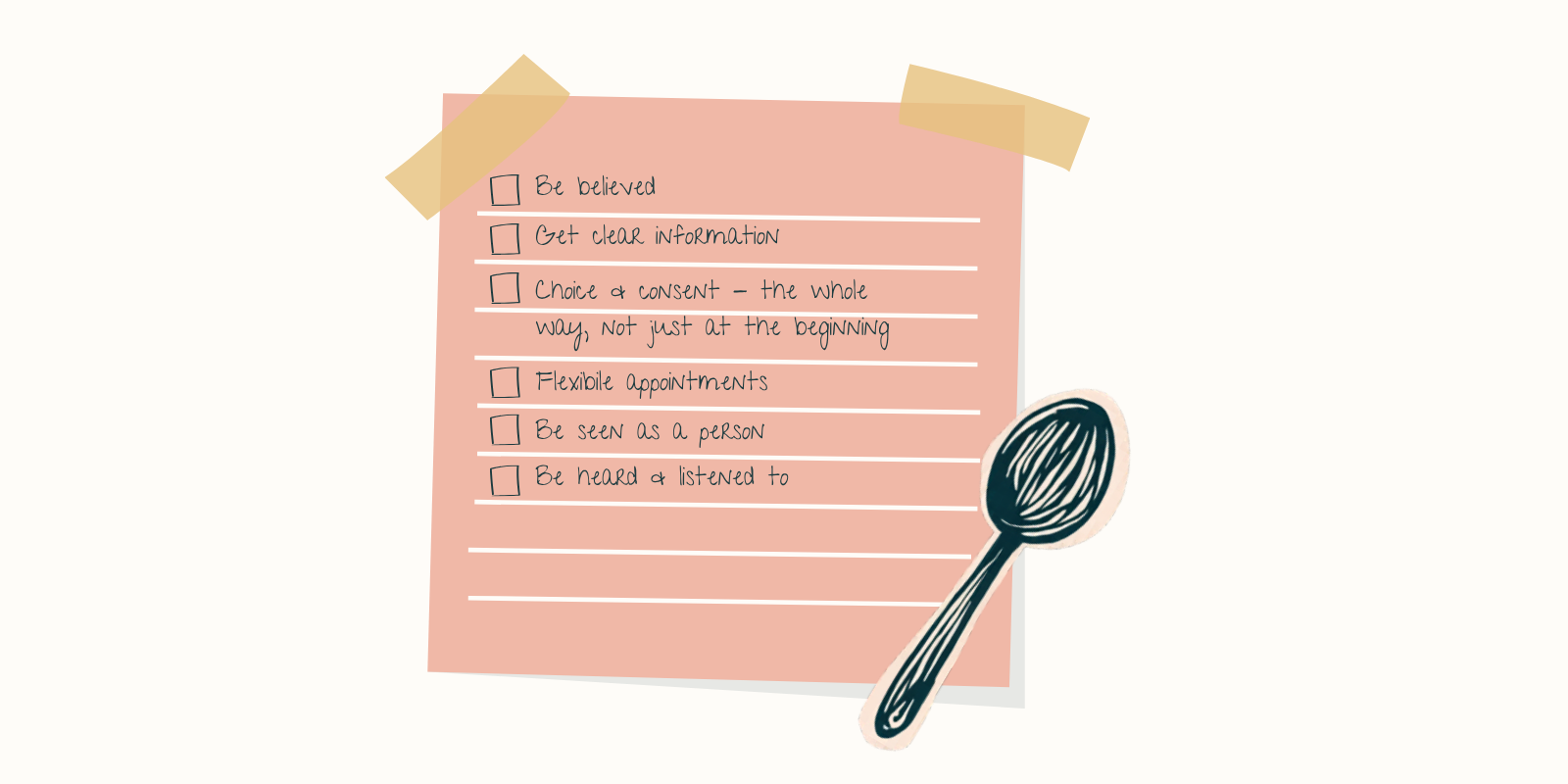
We need to be believed
Chronically ill people are often required to explain their symptoms repeatedly.
Some have been told their pain is exaggerated, their symptoms are psychological or their needs are too complicated.
Being trauma-informed means listening without immediately minimising, doubting or attempting to correct someone’s lived experience.
Providers don’t need to have every answer. A willingness to listen and remain curious can make an enormous difference.
We need clear information
Uncertainty can make accessing support harder.
Clear information helps clients prepare, make informed decisions and use their limited energy more effectively.
Before an appointment, it helps to explain:
What the appointment will involve
How long it will take
What it will cost
Whether forms must be completed
What accessibility options are available
What happens if plans need to change
Clear communication is an important form of accessibility.
We need choice and consent
People who have experienced medical trauma may feel particularly vulnerable when they don’t understand what is happening or feel unable to say no.
Trauma-informed providers explain what they’re doing before they do it.
They ask rather than assume. They offer meaningful choices and allow time for clients to process information, ask questions or change their minds.
Consent should be an ongoing conversation - not a single box that was ticked at the beginning.
We need flexibility
Chronic illness can be unpredictable.
Someone may have the capacity to attend when they book an appointment but experience increased symptoms on the day.
Flexibility might include:
Telehealth or telephone appointments
Different communication options
Rest or movement breaks
Shorter appointments
Flexible camera use
Additional processing time
Understanding when capacity unexpectedly changes
Not every adjustment will be possible for every provider. Being transparent about what can and cannot be offered still helps clients make informed choices.
We need to be seen as people
A chronically ill client is more than their diagnosis.
Our needs, identities, communication styles and experiences are not all the same. What feels safe and accessible for one person may not work for another.
The most helpful question a provider can ask is often a simple one:
“What would help make this feel more accessible for you?”
Trauma-informed support doesn’t require perfection.
It requires listening, openness and a willingness to work alongside the person seeking support.
Because chronically ill people are already carrying enough.
Accessing care shouldn’t leave us carrying more.
If this reflects how you already work, we'd love to hear from you. The Spoonie Support Hub is a verified directory of providers who understand energy limits and respect lived experience. Find out how listing works.
