

Finding the right support shouldn’t be this hard
When you’re already living with chronic illness, disability, neurodivergence, or fluctuating capacity, finding the right support can feel like another full-time job.
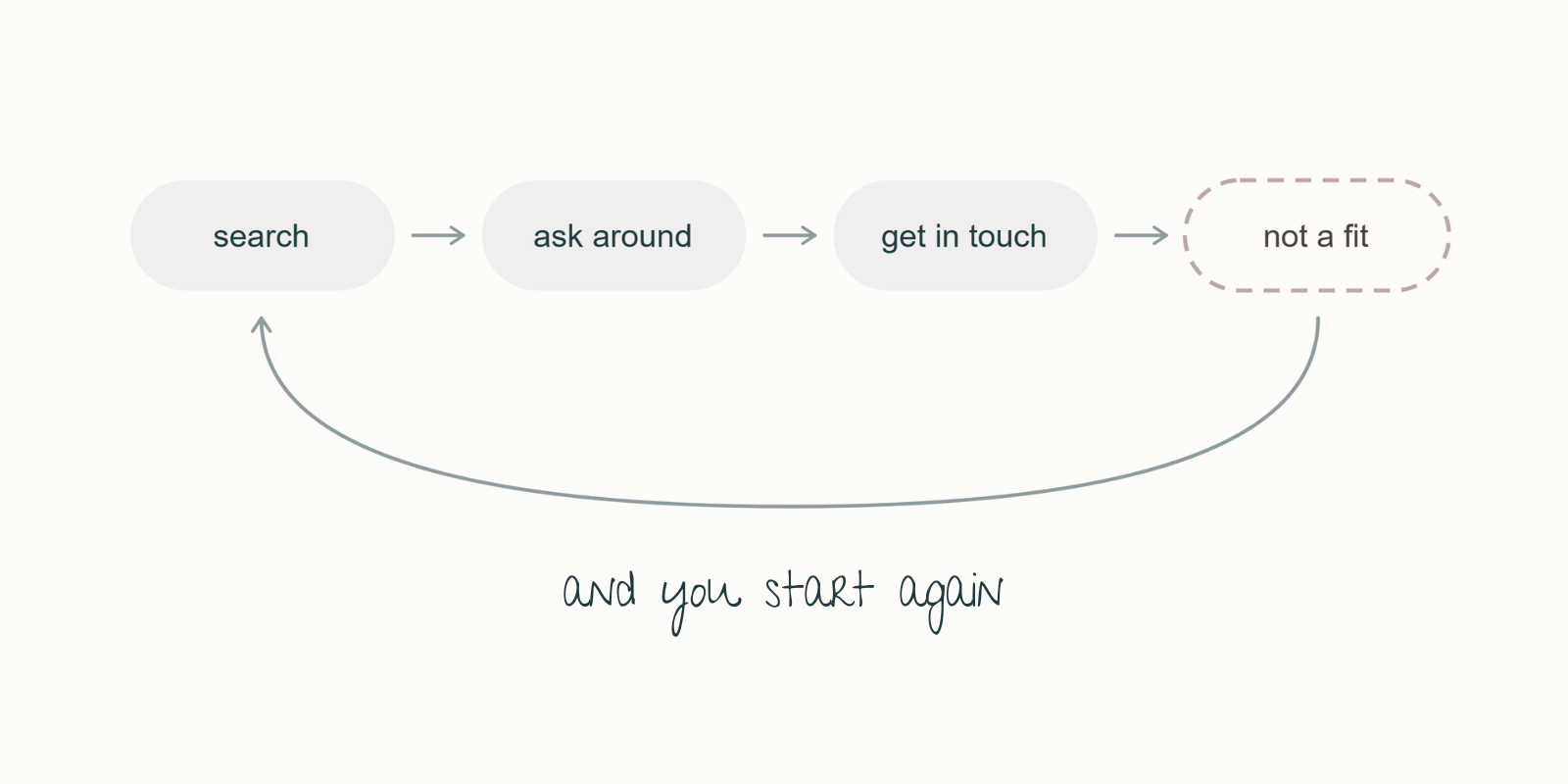
You search Google. You ask for recommendations. You look through Facebook groups. You check websites and reviews. You make phone calls. You send emails.
And eventually, you find someone who might be suitable.
Except they’re not taking new clients.
Or they don’t offer accessible appointments.
Or their approach doesn’t feel right.
Or they don’t understand your needs.
So you start again.
It’s not always about finding a provider
There are plenty of qualified and wonderful providers out there.
The difficult part can be finding the right provider for you.
Someone can have all the right qualifications and still not be the right fit. They might provide the service you need but not work in a way that makes you feel comfortable, understood or supported.
Maybe you need someone who understands chronic illness. Maybe accessibility is important to you. Maybe you need a neuroaffirming or trauma-informed approach. Maybe you need flexibility when your capacity changes.
These things matter.
Getting it wrong has a cost
For many people, a difficult appointment isn’t simply an inconvenient experience.
It can mean using precious energy, spending money, taking time off work, and potentially spending days recovering afterwards.
It can mean having to explain your history all over again.
And after enough difficult experiences, it can become tempting to stop looking altogether.
Not because you don’t need support.
Because finding support has become exhausting.
You deserve to know more before you make the appointment
Imagine being able to find out more about a provider before spending your limited energy contacting them.
What do they specialise in? Are they accepting new clients? What approaches do they use? Do they offer telehealth? Are they experienced with complex needs? What kinds of accessibility needs can they accommodate?
You shouldn’t have to become an investigator just to find someone who might be a good fit.
Finding support shouldn’t add another layer of exhaustion to an already difficult life.
The right support isn’t just about finding someone who can help. It’s about finding someone who can help in a way that works for you.
That's what we built the directory for. Every listing tells you what a provider specialises in, how they work, whether they're taking new clients, and what accessibility they can offer, so you can work out whether someone's a fit before you spend a single spoon on contacting them.
